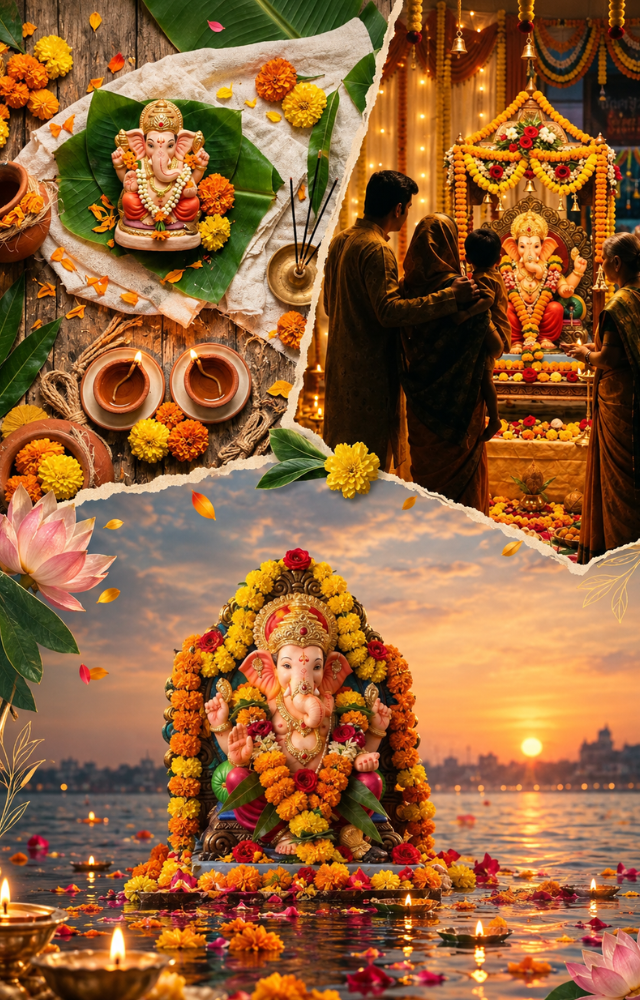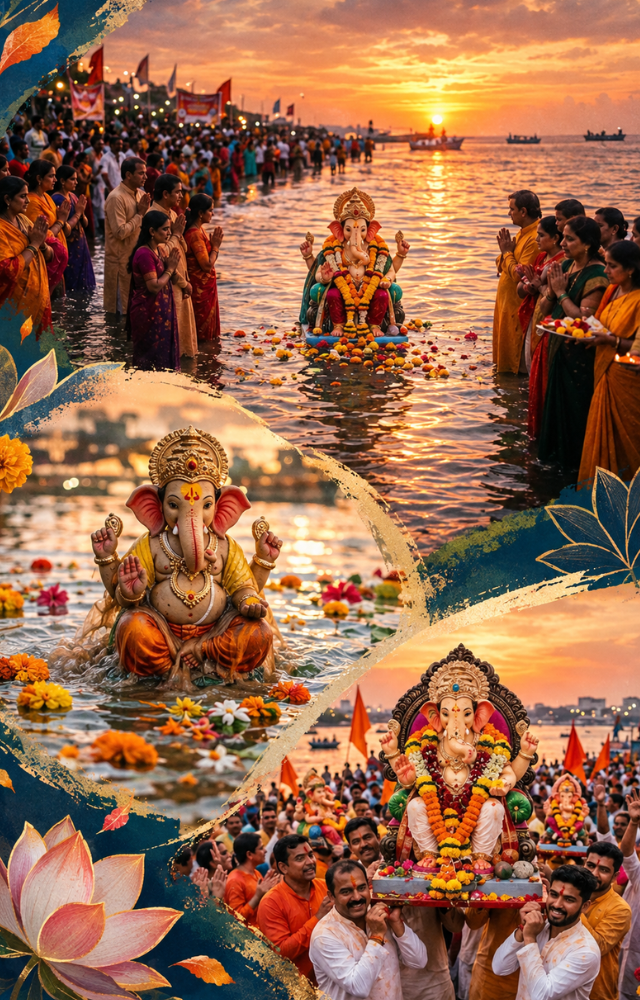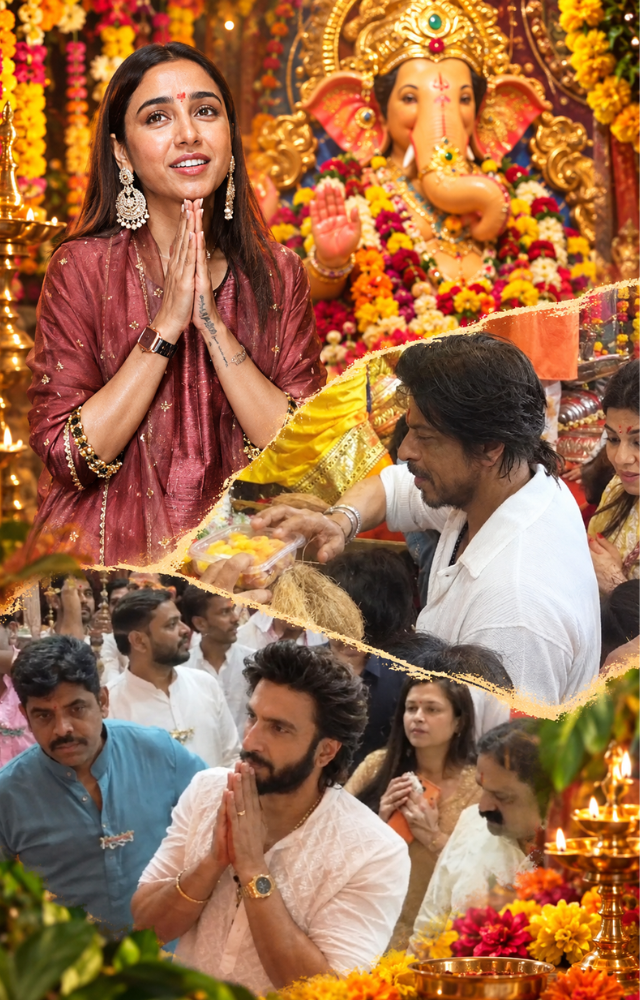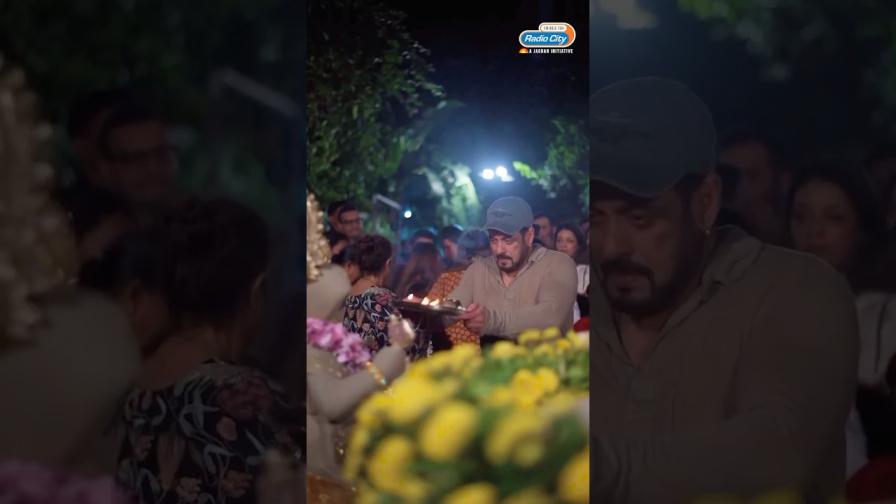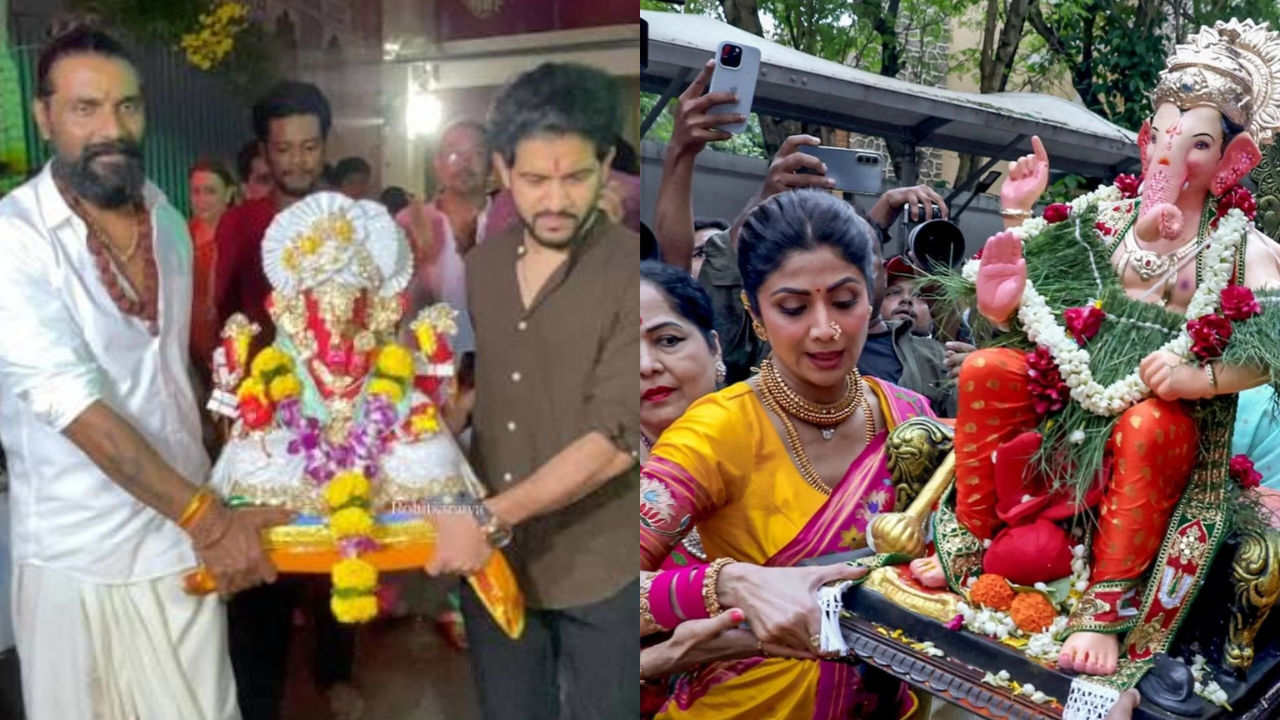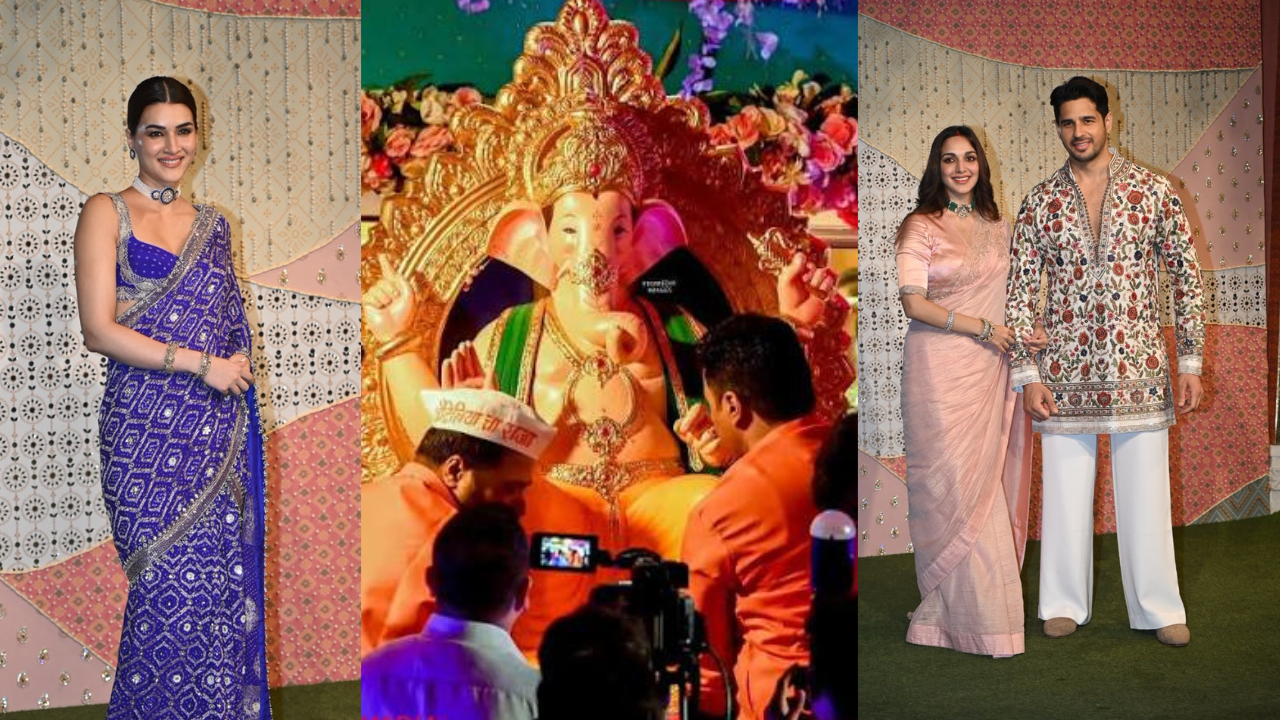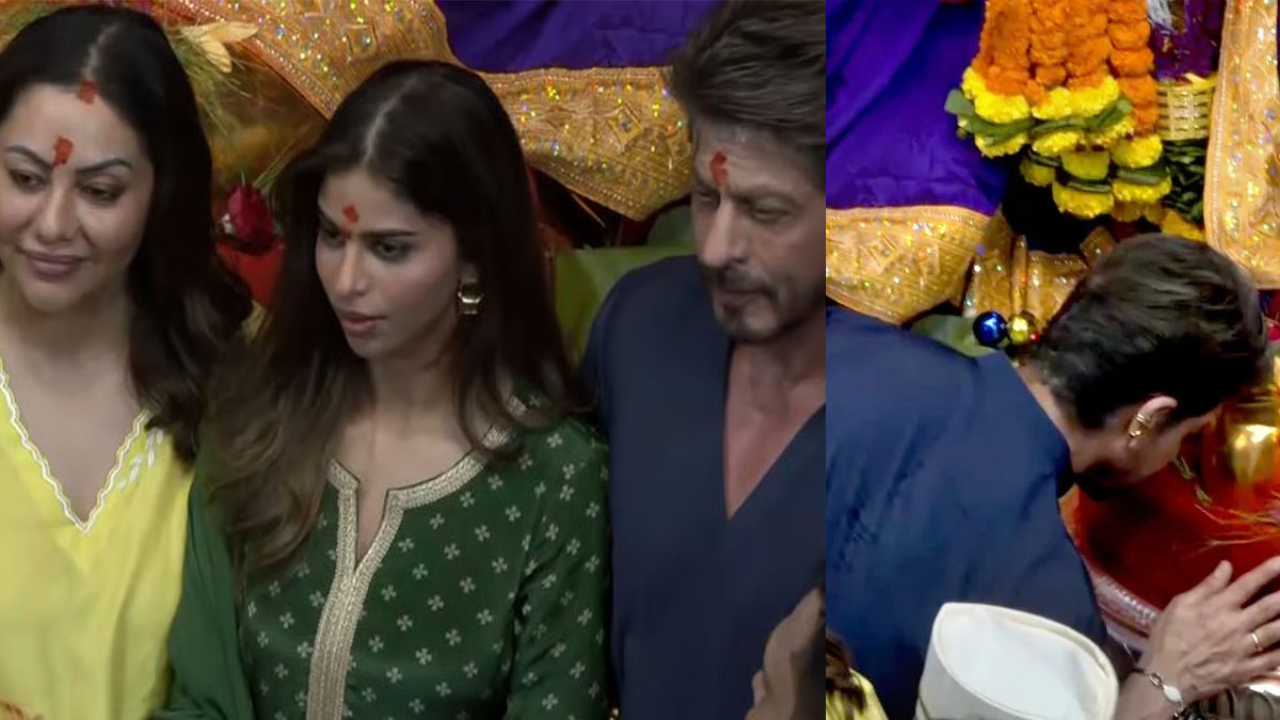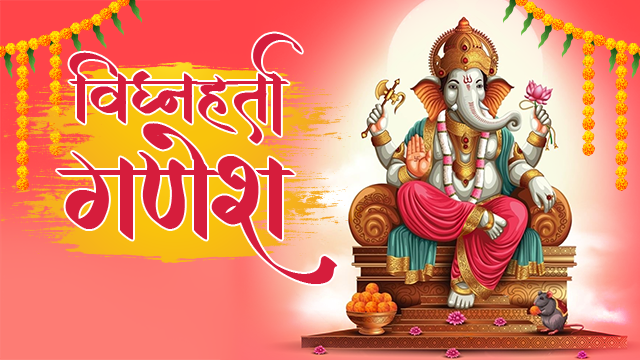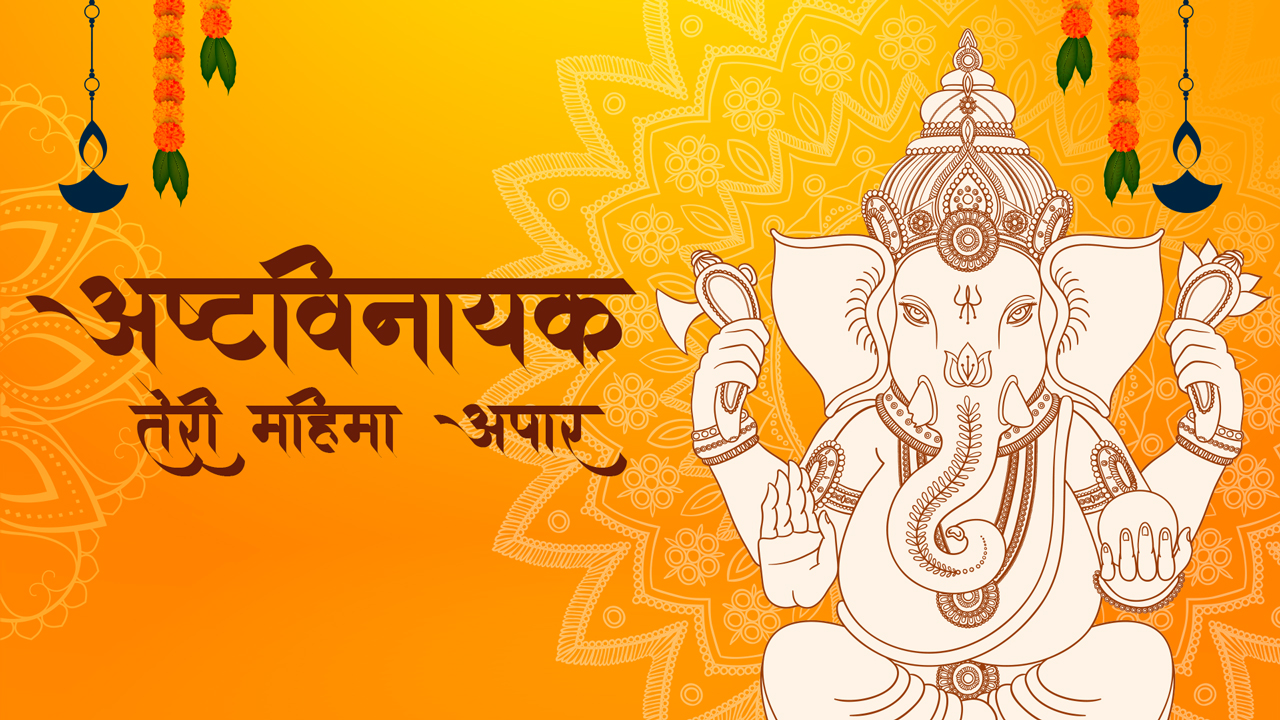







Ganesh Chaturthi 2026 is here and so is the divinity of Lalbaugcha Raja! It's the time of the year to indulge ourselves into the devotion and magic of Lalbaugcha Raja, his stories, the bhajans, and much more! Radio City is bringing to you the tales of Ganpati, engaging audio narratives, and stunning illustrations. Every story will show Lord Ganesha's wisdom, the significance of the festival, and the journey into Hindu mythology. Be the part of this journey by PLAYING THE EXCITING QUIZ everyday and winning exciting prizes! Send in your entries now!

The Birth of Ganesha
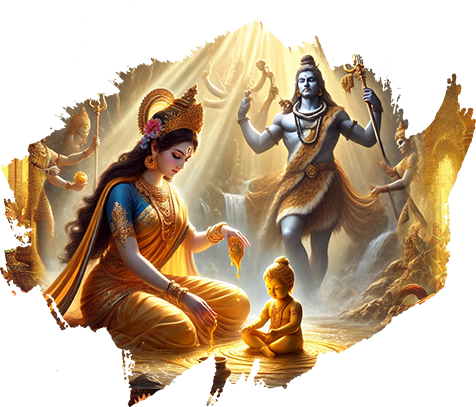
Goddess Parvati created Ganesha from the turmeric paste she used during her bath. She gave him life and asked him to guard the entrance while she bathed. When Lord Shiva, Parvati's husband, returned home, Ganesha, following his mother's orders, refused to let him enter. Angry at being stopped, Shiva, unaware of who Ganesha was, beheaded him in a fit of rage. Upon realizing Ganesha was Parvati's son, Shiva promised to bring him back to life. He ordered his attendants to bring the head of the first creature they found, which was an elephant. Shiva placed the elephant's head on Ganesha's body and brought him back to life, declaring him his son and the leader of his followers, the Ganas.
Moral/Significance:The story signifies the importance of duty, obedience, and the cycle of life and death. It also explains why Ganesha is worshipped at the beginning of new ventures and is revered as the remover of obstacles.
The Broken Tusk
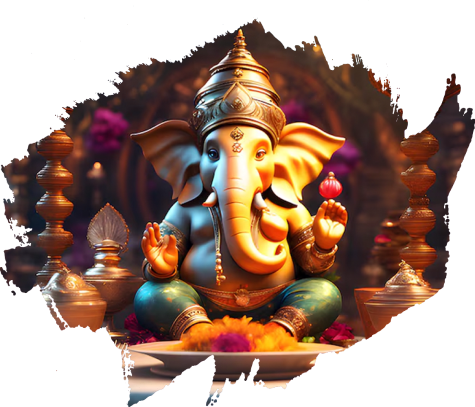
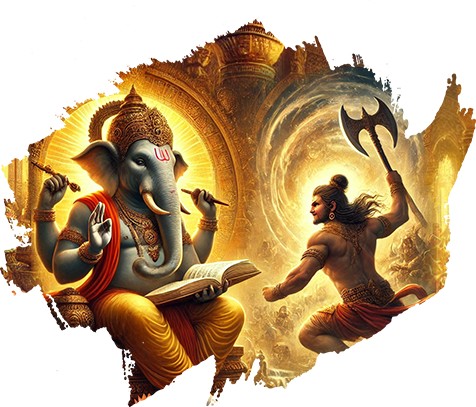
There are various legends about how Ganesha broke his tusk. One popular version tells that Ganesha broke off his own tusk to use it as a writing tool for the Mahabharata when his pen broke during the transcription. Another story narrates how Ganesha, in a battle with the demon Parashurama, lost his tusk while defending himself. Parashurama had thrown his axe at Ganesha, but out of respect for the weapon given to Parashurama by Shiva, Ganesha allowed it to hit him, breaking his tusk.
Moral/Significance:The broken tusk symbolizes sacrifice, the pursuit of knowledge, and the acceptance of imperfection in oneself. It also illustrates Ganesha's devotion to duty and learning.
Ganesha and the Moon
One night, Ganesha was returning home after a feast when he stumbled and fell, causing his stomach to burst open and all the sweets inside to spill out. The moon, Chandra, laughed at Ganesha's misfortune. Angered by this, Ganesha cursed the moon, causing it to lose its light. However, when the moon apologized, Ganesha relented and reduced the curse, allowing the moon to wax and wane. This is why it's considered inauspicious to look at the moon on Ganesh Chaturthi.
Moral/Significance:The story teaches humility and the importance of not mocking others' misfortunes. It also explains certain cultural practices associated with Ganesha and the lunar cycle.
Ganesha as Ekadanta (One-Tusked)
Ganesha as Ekadanta
(One-Tusked)
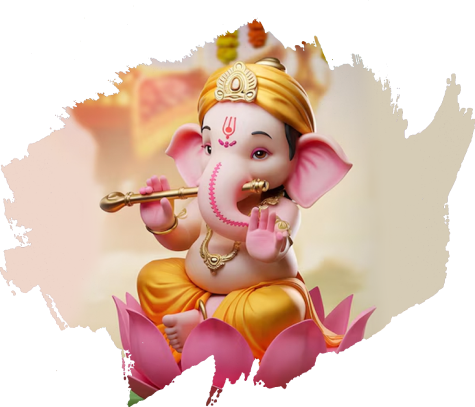
In another version of the broken tusk legend, Ganesha is challenged by a demon named Gajamukhasura, who could only be defeated by a weapon made from a single tusk. To protect the world, Ganesha broke off his tusk and used it as a weapon to defeat the demon, earning the name Ekadanta, meaning "one-tusked."
Moral/Significance:This story reinforces the themes of self-sacrifice and the protection of dharma (righteousness) at all costs. It also symbolizes the triumph of good over evil.
Ganesha and Kubera's Feast
Ganesha and Kubera's
Around the World
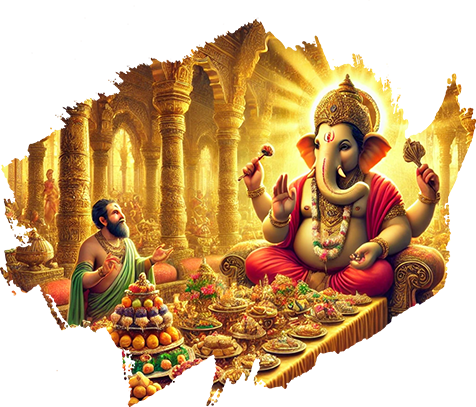
Kubera, the god of wealth, once invited Ganesha to a grand feast to show off his riches. Ganesha accepted the invitation but kept eating and eating, eventually devouring all the food in Kubera's palace. When there was nothing left, Ganesha threatened to eat Kubera himself. Terrified, Kubera realized his mistake and sought advice from Lord Shiva, who suggested offering Ganesha a humble handful of rice with true devotion. Satisfied with this simple offering, Ganesha forgave Kubera, teaching him that true wealth lies in humility and devotion, not in material riches.
Moral/Significance:The story teaches the value of humility and the idea that sincere devotion is more important than material wealth.
Ganesha and the Race
Around the World
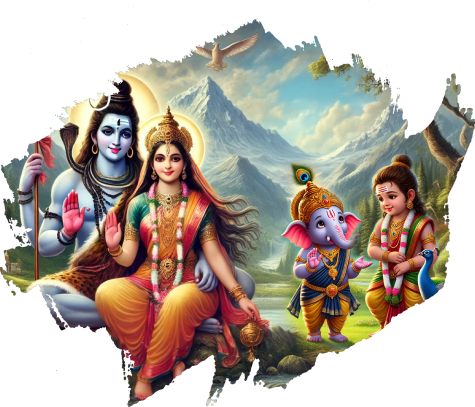
Once, Ganesha and his brother Kartikeya had a dispute about who was the elder. To settle the matter, their parents, Shiva and Parvati, proposed a race around the world. Kartikeya, who had a swift peacock as his mount, set off immediately. Ganesha, whose vehicle was a slow-moving mouse, knew he couldn't win the race by traditional means. Instead, he circled around his parents, declaring that they were his entire world. Impressed by his wisdom, Shiva and Parvati declared Ganesha the winner, acknowledging that true wisdom lies in recognizing the divine presence in all things.
Moral/Significance:This story highlights the importance of intelligence and wisdom over physical prowess. It also emphasizes the belief that divinity resides in one's parents and in the entire creation.
Ganesha and the Writing
of the Mahabharata
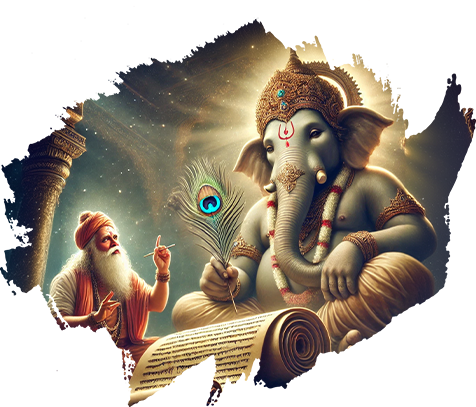
The sage Vyasa was tasked with composing the epic Mahabharata, but he needed someone to write it down as he dictated. He approached Ganesha for help. Ganesha agreed but on the condition that Vyasa would not pause while dictating, as he did not want to waste time. Vyasa accepted but with a counter-condition that Ganesha must understand every verse before writing it down. This allowed Vyasa time to compose his thoughts while Ganesha considered the meanings, ensuring that the epic was written perfectly.
Moral/Significance:This story shows Ganesha's intellect and wisdom, emphasizing the importance of understanding and contemplation in the process of learning and knowledge acquisition. It also explains why Ganesha is revered as the patron of writers and intellectuals.
Associate Sponsor